Northern Bald Ibis in Türkiye: an update on satellite tracking studies
Guest blog by Can Yeniyurt
In recent years, OSME through its small grants programmes (The Conservation Fund and the Trevor Poyser Species Conservation Fund) has supported important research on the migration of Northern Bald Ibis in Türkiye. In this guest blog, Can Yeniyurt of WWF-Türkiye provides an overview of recent research and what this means for future conservation efforts.
The eastern population of the Northern Bald Ibis (Geronticus eremita; hereafter NBI) is classified as an endangered migratory bird species. The NBI population in Türkiye has remained non-migratory since 1989 and because it is enclosed for half of the year, it is described in the literature as semi-wild. Over the past twenty years, a few birds have been left out of the enclosures in late summer, and in 2021, 15 ringed individuals left Türkiye; two were later recorded on the Egypt–Israel border, but none successfully completed their return migration. This observation nevertheless provides encouraging evidence that, despite decades of sedentary behaviour, the genetic basis for migratory orientation persists within the population, suggesting potential for the re-establishment of a self-sustaining wild migratory group.
In 2023, WWF-Türkiye, with support from OSME’s Trevor Poyser Species Conservation Fund and in collaboration with the General Directorate of Nature Conservation and National Parks (DKMP) under the Ministry of Agriculture and Forestry of the Republic of Türkiye, procured GPS tags for three NBIs. Following coordination with the DKMP tagging team, the number of tags was increased to four. In early July 2023, four individuals were tagged in Birecik and released alongside 30 ringed NBIs. Most of the released birds subsequently dispersed from the vicinity of Birecik; tracking data allowed their movements to be monitored with high spatial precision.
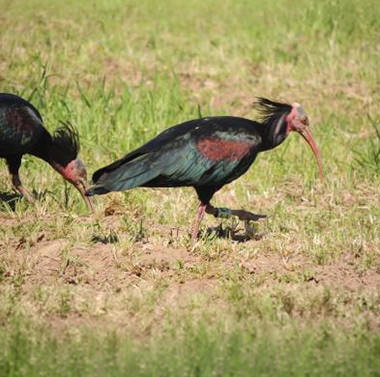
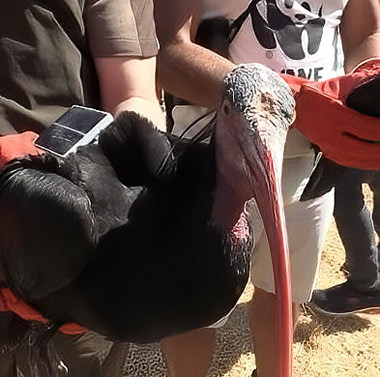
One individual remained in the Birecik area, while others initiated southward and eastward migration.
One bird crossed the into northern Saudi Arabia. DKMP field teams were deployed to the coordinates in Türkiye, while parallel search efforts in Saudi Arabia were conducted by teams supported by the Imam Turki Bin Abdullah Royal Nature Reserve Development Authority (ITBA), with links to BirdLife International, the Middle East Partnership Secretariat, the National Center for Wildlife (NCW), OSME, and the Northern Bald Ibis International Working Group. Despite multiple site visits in Saudi Arabia, unfortunately neither the individual nor the transmitter was located, and subsequent signal transmission ceased.
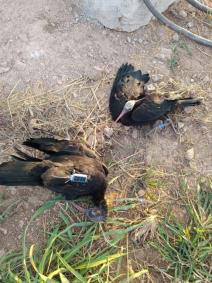
On the third day post-release, two NBIs—one carrying a GPS tag—were found dead or fatally injured due to electrocution near the Türkiye–Syria border. By the fourth day, the signal from another tagged bird became stationary, indicating another mortality.
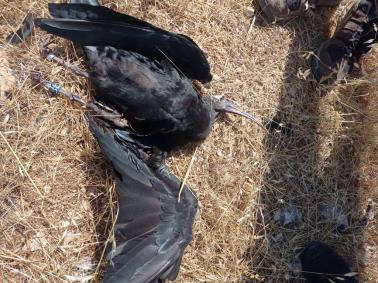
In response, WWF-Türkiye and DKMP engaged with the regional electricity provider, Dicle Elektrik. Following consultations, all poles in the area where electrocutions occurred, as well as 2.4 km of associated power line, were insulated to prevent further bird mortality.
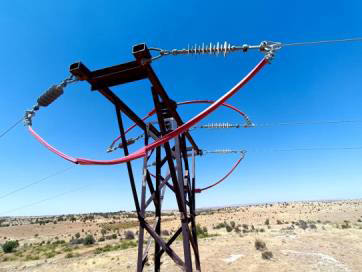
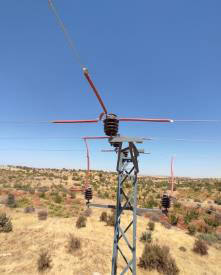
In December 2023, the remaining tagged NBI and other non-migratory individuals that remained near the Birecik colony site were recaptured and transferred to aviaries.
In June 2024, two additional NBIs were tagged in Birecik and released with 45 ringed conspecifics, including 15 juveniles born in 2024. The tagged birds initially moved approximately 100 km northward before turning south. They reached Syria within one day and Iraq the following day. The last signal from one bird was received near a meander of the Tigris River in eastern Iraq, while the second bird was last detected on the banks of the Maron River in southwestern Iran on 20 July 2025.
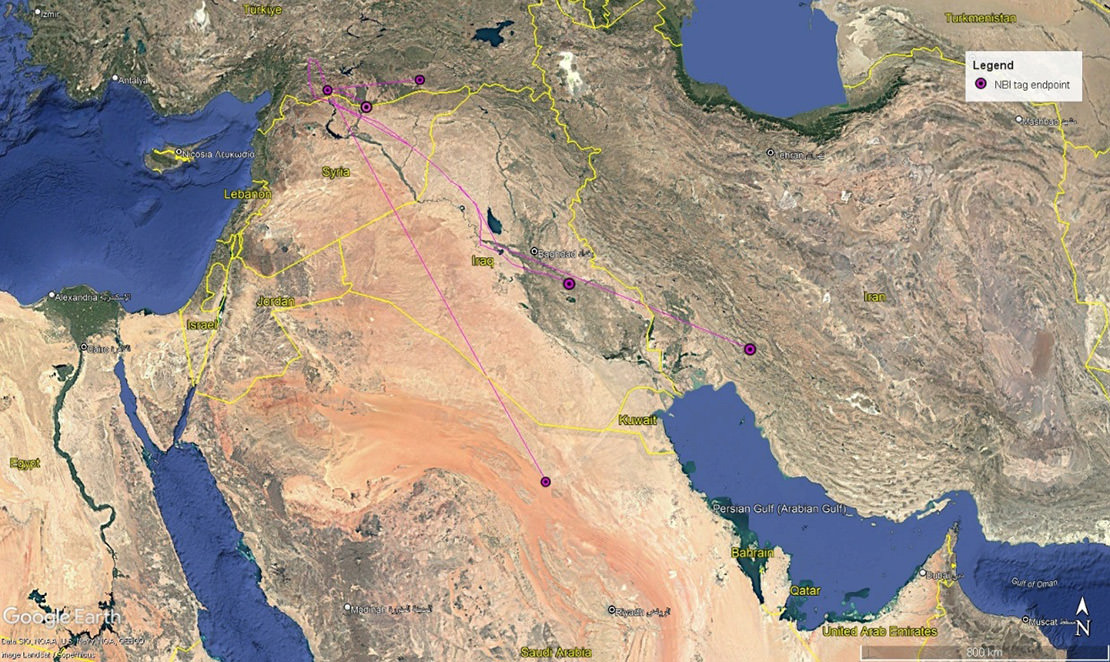
Despite extensive search efforts by birdwatchers and local authorities, neither bird was subsequently located. The final transmission points were situated in areas characterized by dense power transmission infrastructure, suggesting electrocution as a likely cause of mortality.
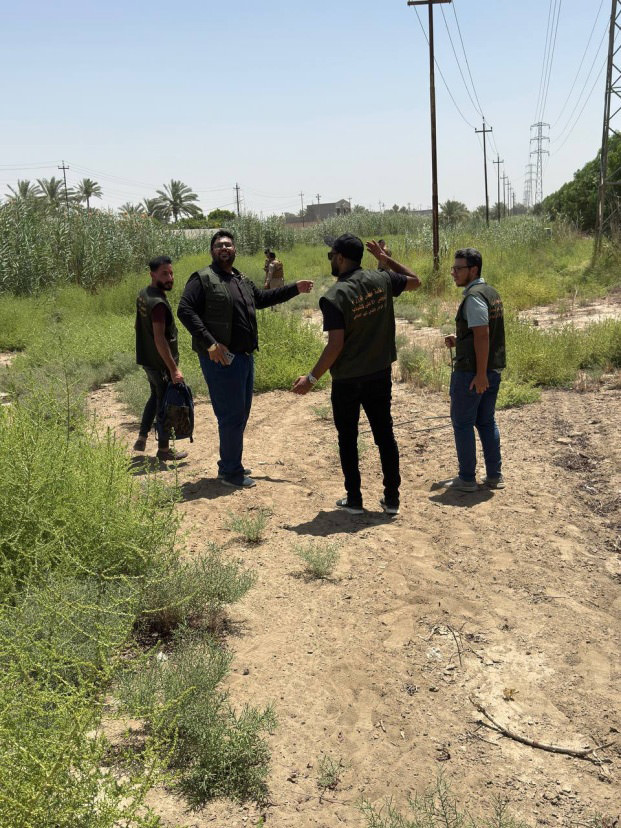
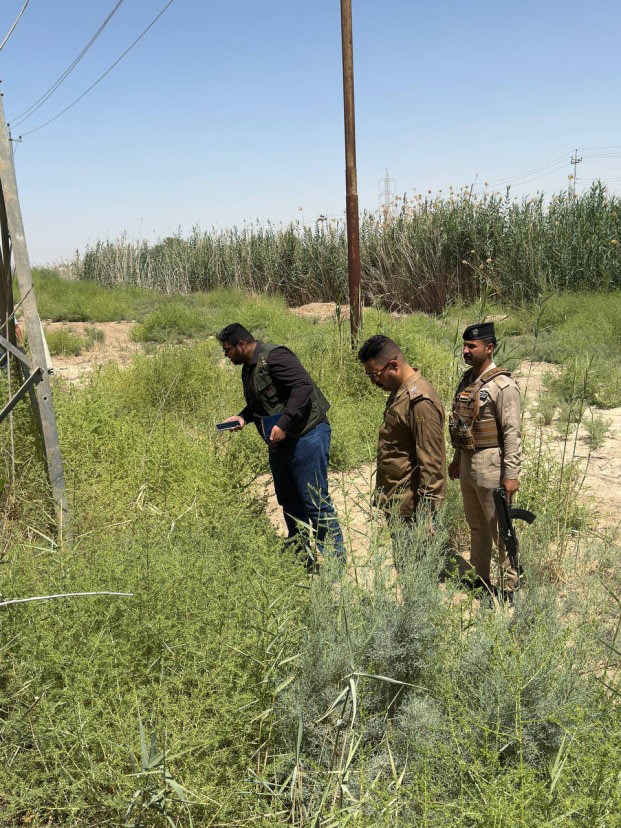
In total, none of the five NBIs tagged in 2023 and 2025 successfully completed their migration. Nevertheless, the data collected provide valuable insights into potential migratory pathways and highlight key anthropogenic threats along these routes. Moreover, the mitigation measures implemented—particularly the insulation of hazardous power lines—represent significant progress toward reducing mortality risks for this critically important population, as well as for other large birds such as raptors. Continued collaboration among governmental agencies, NGOs, and international partners will be essential to restoring a viable migratory population of the Northern Bald Ibis in the Middle East.
Chris Bowden, Coordinator of the AEWA International Species Action Plan for the NBI pointed out that releases of small numbers of tagged birds from Birecik remains a priority for identifying ongoing threats to the species, meanwhile hoping that some birds might survive and return. The provision of tags was timely and very welcome, and these results should be fully documented to learn as much as possible from these important trials.
With the recent excellent breeding productivity of the semi-wild Birecik population, another positive outcome has been the establishment of additional breeding populations of these genetically distinct Eastern birds at three separate Turkish zoos. A third priority in the plan for Türkiye is to identify a suitable site where a second semi-wild population could be established in the country, and although there has been progress on documenting possible areas, this is still at the discussion phase.
The AEWA SSAP NBI can be downloaded here: International Single Species Action Plan for the Conservation of the Northern Bald Ibis | AEWA
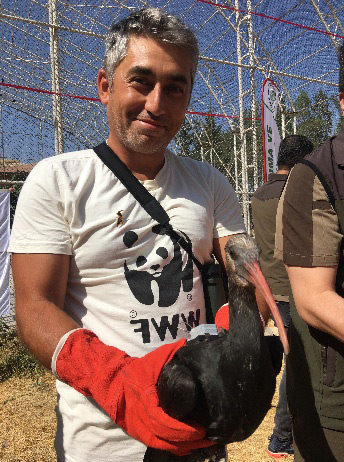
Can Yeniyurt, Senior Biodiversity Officer, WWF-Türkiye